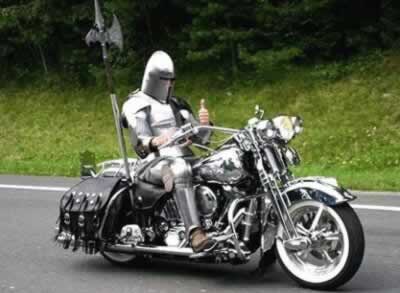
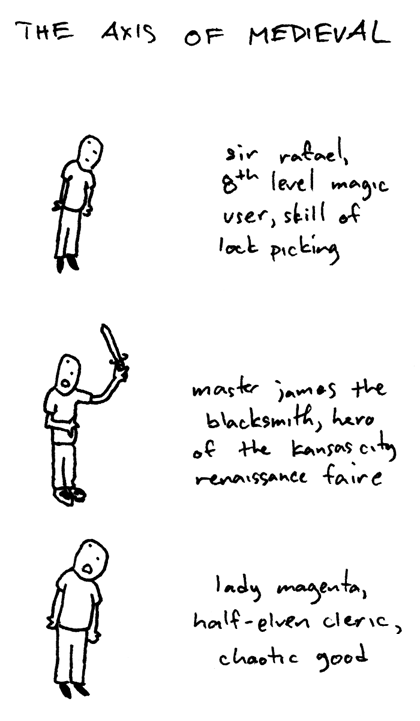
The Middle Ages were exactly like this. A little known fact that I just made up: St. Bartholomew of Farne (feast day June 24th) was also expelled from elementary school for baking a giant rat pie.
Monday, April 30, 2007


Saturday, April 28, 2007
Renaissance Faires and Popular Medievalism
Medieval academics, admit it. Like me, you have a bit of a snobby attitude about Renaissance Faires. I went to my first faire some years ago, and spent a good deal of time scoffing that:
Yes, it's more medieval than Renaissance ... but the Renaissance was itself home of all sorts of interesting medievalism. Since the Middle Ages, people have enjoyed harkening back to those days, whether through Early Modern love of heraldry or contemporary American theme festivals. In large part, this impulse toward an a-historical medievalism is nothing new (heck, look at how a-historical medieval histories are about the earlier Middle Ages!), but simply an attempt to write for ourselves a mythic past in an effort to define ourselves today. We define ourselves both with and against this medievalism -- patting ourselves on the back that we somehow share in the honor and courage of the jousting knight, and patting ourselves just as hard because we no longer have stocks and public floggings (Oprah guests excepted). It's more about who we are than who they were.
Yes, much of it is myth, and, as I mentioned above, those myths serve a powerful purpose. Still, in a couple of weeks I'll be at the International Medieval Congress at Kalamazoo, hearing from other experts in the field, and I bet I'll have at least one myth punctured. I always learn something at K'zoo, because there is simply no way for a single man to know everything about the Middle Ages, or medieval literature, or Anglo-Saxon literature, or even a single Anglo-Saxon poem. It is hard for me to condemn others for their ignorance when medieval studies is just their weekend hobby, and it is my bread-and-butter. When people are ignorant of medieval truths, medieval scholars are culpable too.
Let's examine the "over-priced garbage" complaint. Yup, the stuff is waaaay to expensive. Yup, much of it is garbage. Still, people buy it. People buy a lot of it. People buy so much of it that the Renaissance Faires are run as for-profit commercial enterprises. Hear that? Medievalism is profitable! People pay too much money for over-priced garbage because they are starving for medievalism. All the time I hear this nonsense that "no one cares about medieval studies, it just isn't relevant, and if we offer courses in it, no one will come" -- BULL! Hundreds of thousands of people (perhaps millions, if someone has the statistics) pour into these Faires every year. When I gave a presentation on real medieval magical and medical practices at InConjunction last year, it was to standing room only -- even more than my Tolkien presentation! Let's see the over-priced garbage as instead an indicator of the market value of what we are offering.
Who are these geeks? They are folks just like you and me, without the degrees. They love the same stuff we love, but because their lives took a different path, they celebrate that love at Renaissance Faires rather than International Medieval Congresses. We scholars have a deeper understanding of this subject that we love, but that doesn't make our love more worthwhile -- it makes our knowledge more worthwhile, but not our love. When I was 17 years old and trying to decide what to do with my life, I almost decided on biomedical engineering, but in the end chose (for whatever muddled 17-year-old reason) to study English instead. A different choice in my life, and I wouldn't find myself in the Medieval Congress either. So, let's not mock these geeks -- they are our brothers and sisters, our fellow travellers. Hey, Ren Faire geeks, I might not attend these faires but once per decade, but I'm one of you too, as is nearly every other person at the Congress.
As for the pirates ... well, these pirates seemed to do a lot more sword-wielding than pistol brandishing. They auctioned off a lot of weapons, but not one was a replica gun, or cannon, or pegleg. They were all daggers and swords and axes and shields and katanas -- as if we were supposed to imagine the Caribbean dotted with extremely disoriented samurais. The pirates are simply the current liaisons between us and the Middle Ages. I don't know for sure, but I'd guess that at one time you could buy a light saber at a Faire. Some day the pirates too will be replaced by a new liaison, so let's let them have their time in the sun.
So, to summarize -- Renaissance Faires, cool. Faire-geeks, cool. Medieval Congress, cool. Medieval scholars, cool. Let's all bask together in the inherent coolness of medievalism.
- It's far more medieval than Renaissance.
- The Middle Ages weren't really like that! It's a myth!
- It's packed with a lot of overpriced garbage.
- Who ARE these geeks?
- Pirates? I mean, really, what crass exploitation of Disney films.
Yes, it's more medieval than Renaissance ... but the Renaissance was itself home of all sorts of interesting medievalism. Since the Middle Ages, people have enjoyed harkening back to those days, whether through Early Modern love of heraldry or contemporary American theme festivals. In large part, this impulse toward an a-historical medievalism is nothing new (heck, look at how a-historical medieval histories are about the earlier Middle Ages!), but simply an attempt to write for ourselves a mythic past in an effort to define ourselves today. We define ourselves both with and against this medievalism -- patting ourselves on the back that we somehow share in the honor and courage of the jousting knight, and patting ourselves just as hard because we no longer have stocks and public floggings (Oprah guests excepted). It's more about who we are than who they were.
Yes, much of it is myth, and, as I mentioned above, those myths serve a powerful purpose. Still, in a couple of weeks I'll be at the International Medieval Congress at Kalamazoo, hearing from other experts in the field, and I bet I'll have at least one myth punctured. I always learn something at K'zoo, because there is simply no way for a single man to know everything about the Middle Ages, or medieval literature, or Anglo-Saxon literature, or even a single Anglo-Saxon poem. It is hard for me to condemn others for their ignorance when medieval studies is just their weekend hobby, and it is my bread-and-butter. When people are ignorant of medieval truths, medieval scholars are culpable too.
Let's examine the "over-priced garbage" complaint. Yup, the stuff is waaaay to expensive. Yup, much of it is garbage. Still, people buy it. People buy a lot of it. People buy so much of it that the Renaissance Faires are run as for-profit commercial enterprises. Hear that? Medievalism is profitable! People pay too much money for over-priced garbage because they are starving for medievalism. All the time I hear this nonsense that "no one cares about medieval studies, it just isn't relevant, and if we offer courses in it, no one will come" -- BULL! Hundreds of thousands of people (perhaps millions, if someone has the statistics) pour into these Faires every year. When I gave a presentation on real medieval magical and medical practices at InConjunction last year, it was to standing room only -- even more than my Tolkien presentation! Let's see the over-priced garbage as instead an indicator of the market value of what we are offering.
Who are these geeks? They are folks just like you and me, without the degrees. They love the same stuff we love, but because their lives took a different path, they celebrate that love at Renaissance Faires rather than International Medieval Congresses. We scholars have a deeper understanding of this subject that we love, but that doesn't make our love more worthwhile -- it makes our knowledge more worthwhile, but not our love. When I was 17 years old and trying to decide what to do with my life, I almost decided on biomedical engineering, but in the end chose (for whatever muddled 17-year-old reason) to study English instead. A different choice in my life, and I wouldn't find myself in the Medieval Congress either. So, let's not mock these geeks -- they are our brothers and sisters, our fellow travellers. Hey, Ren Faire geeks, I might not attend these faires but once per decade, but I'm one of you too, as is nearly every other person at the Congress.
As for the pirates ... well, these pirates seemed to do a lot more sword-wielding than pistol brandishing. They auctioned off a lot of weapons, but not one was a replica gun, or cannon, or pegleg. They were all daggers and swords and axes and shields and katanas -- as if we were supposed to imagine the Caribbean dotted with extremely disoriented samurais. The pirates are simply the current liaisons between us and the Middle Ages. I don't know for sure, but I'd guess that at one time you could buy a light saber at a Faire. Some day the pirates too will be replaced by a new liaison, so let's let them have their time in the sun.
So, to summarize -- Renaissance Faires, cool. Faire-geeks, cool. Medieval Congress, cool. Medieval scholars, cool. Let's all bask together in the inherent coolness of medievalism.
Thursday, April 26, 2007
Charlemagne in Tawdry Sex Scandal with Hollywood Star!
Jeff Sypeck's presentation here on Troy University's campus on Becoming Charlemagne was really well received. Once he arrived, it was a whirlwind of interviews, presentations, signings, and very rich cake. Jeff is a personable guy, and I had such a delightful time chatting with him that neither of us got to bed at a decent hour. So, if Sypeck is coming to your area, I would encourage you to do more than just go to the book signing -- get to know him better!
One interesting fact that I did not know: Shirley MacLaine claims to have been Charlemagne's lover in a past life, and also has had an affair (in this life) with a reincarnation of Charlemagne. If I may add a little speculation -- MacLaine further claims to have been an orphan raised by elephants in a past life, and as we all know, Charlemagne had an elephant named Abul Abaz. I see no where that MacLaine claims to have been the human lover of Charlemagne, simply a "gypsy Moorish girl." Couldn't "gypsy Moorish girl" refer just as easily to a female elephant from Baghdad that travels for years before arriving in Aachen? I humbly submit to you, therefore, that Abul Abaz is the decendant of forbidden elephant/human marriage, and that therefore the name when Shirley MacLaine seduced Charlemagne, she did so in the incarnation of the elephant Abul Abaz. It's the only reasonable explanation.
One interesting fact that I did not know: Shirley MacLaine claims to have been Charlemagne's lover in a past life, and also has had an affair (in this life) with a reincarnation of Charlemagne. If I may add a little speculation -- MacLaine further claims to have been an orphan raised by elephants in a past life, and as we all know, Charlemagne had an elephant named Abul Abaz. I see no where that MacLaine claims to have been the human lover of Charlemagne, simply a "gypsy Moorish girl." Couldn't "gypsy Moorish girl" refer just as easily to a female elephant from Baghdad that travels for years before arriving in Aachen? I humbly submit to you, therefore, that Abul Abaz is the decendant of forbidden elephant/human marriage, and that therefore the name when Shirley MacLaine seduced Charlemagne, she did so in the incarnation of the elephant Abul Abaz. It's the only reasonable explanation.
Tuesday, April 24, 2007
On Point -- Inventing English
This came through AnSax Net this morning, though the show originally aired nearly two weeks ago -- NPR's "On Point" interview with Seth Lehrer about the history of the English language. Those of you who are regular Wordhoarders will know that I am nearly daily offended by NPR (which also happens to be one of only two radio stations I can receive consistently on my daily drive to drop of the kids at school), and I certainly can't recommend people listen to "On Point" regularly.
Still, this broadcast is probably worth a listen. Only about the first eleven minutes are medieval, after which time it becomes a discussion of Modern English dominated by Shakespeare. Near the end it becomes difficult to listen to as Ashbrook tries to show how hip he is (in that pathetic NPR way) by playing Tupac and M&M, but most listeners will probably abandon it by then.
One clarification: A school teacher calls in and says that she's been teaching that Latin came into English with the Roman invasion and occupation of England, and asks if that is correct. Lehrer very graciously uses ambiguous language to imply that it is sort-of right, but that you get more Latin influence with the Norman invasion in 1066.
Lehrer is just being polite in his careful mincing of words. The Romans invaded and occupied the Britons (who spoke a Celtic language), and the Anglo-Saxons didn't come to England in force until after the Romans had pulled out completely. Latin, then, comes in English as a language through the later Christianization of the Anglo-Saxons, not really from the Romans. In other words, what she's been teaching is essentially wrong.
Still, this broadcast is probably worth a listen. Only about the first eleven minutes are medieval, after which time it becomes a discussion of Modern English dominated by Shakespeare. Near the end it becomes difficult to listen to as Ashbrook tries to show how hip he is (in that pathetic NPR way) by playing Tupac and M&M, but most listeners will probably abandon it by then.
One clarification: A school teacher calls in and says that she's been teaching that Latin came into English with the Roman invasion and occupation of England, and asks if that is correct. Lehrer very graciously uses ambiguous language to imply that it is sort-of right, but that you get more Latin influence with the Norman invasion in 1066.
Lehrer is just being polite in his careful mincing of words. The Romans invaded and occupied the Britons (who spoke a Celtic language), and the Anglo-Saxons didn't come to England in force until after the Romans had pulled out completely. Latin, then, comes in English as a language through the later Christianization of the Anglo-Saxons, not really from the Romans. In other words, what she's been teaching is essentially wrong.
Monday, April 23, 2007
Children of Hurin (and a lot of Drout)
Not only haven't I yet read The Children of Húrin, I haven't even bought it yet ... nor am I likely to do either until after the International Medieval Congress. Still, the book is around now, and for those who cannot get enough Tolkien, here are (in no particular order):
- The Washington Post Review
- The St. Petersburg Times Review
- The NPR Review (with Michael Drout)
- Michael Drout's review on Wormtalk and Slugspeak
- FAQs on Tolkien Library
- Adam Tolkien on the book
- CNN's Review
- Salon.com's review
- Bryan Appleyard's review in the Times Online
- Jeremy Marshall's review
- The Times Online's article
- Toronto Star's review
- The Library Journal's Review
- Houghton Mifflin's trailer for The Children of Húrin
Thursday, April 19, 2007
Codpiece Silliness
Just a warning: There is nothing edifying in this short film on emergency codpiece substitutions. Also, though it has no nudity or profanity, it may not be workplace-friendly -- unless of course you are a medievalist like me (or an early-modern scholar), in which any discussion of codpieces is entirely within bounds.
Tuesday, April 17, 2007
Charlemagne in Troy

Jeff Sypeck, author of Becoming Charlemagne: Europe, Baghdad, and the Empires of A.D. 800, will do a presentation and book signing next week at Troy University, on Tuesday, April 24th at 3PM in HAL Hall of Honor.
In addition to getting to hear about why Charlemagne matters, we'll have refreshments and, of course, my own delightful presence. Of course, you don't have to come at all if you don't want to ... but then all your friends will be whispering about you behind your back.
Friday, April 13, 2007
If You Like This Page...
... you'll find other things to like in my blogroll.
As veteran medieval bloggers know, one of my favorite hobbyhorses is that medievalists should be linking to one another in order to raise our Google profile as a whole, so when people are looking for information on medieval topics they are sent to a legitimate site, not a freshman term paper cheat site.
The last few weeks the Wordhoard has caught fire. After flirting with the 500 page views per day benchmark, Unlocked Wordhoard crossed that recently, and is now flirting with 500+ unique visitors. Most of those visitors are first-timers coming here because of articles that are getting e-mailed around and linked to in various newsgroups.
So, new visitors, welcome! If you are interested in medieval stuff, I want to encourage you to visit the many fine medieval sites on the blogroll to the right. Just a few of the more recent postings among our colleagues:
As veteran medieval bloggers know, one of my favorite hobbyhorses is that medievalists should be linking to one another in order to raise our Google profile as a whole, so when people are looking for information on medieval topics they are sent to a legitimate site, not a freshman term paper cheat site.
The last few weeks the Wordhoard has caught fire. After flirting with the 500 page views per day benchmark, Unlocked Wordhoard crossed that recently, and is now flirting with 500+ unique visitors. Most of those visitors are first-timers coming here because of articles that are getting e-mailed around and linked to in various newsgroups.
So, new visitors, welcome! If you are interested in medieval stuff, I want to encourage you to visit the many fine medieval sites on the blogroll to the right. Just a few of the more recent postings among our colleagues:
- Cacciaguida has a post about Anselm and the Crucifixion
- Got Medieval has a post on the supposed bones of Joan of Arc
- Haligweorc has a post on monastic New Testament interpretation
- The Medieval Geek's Guide has a comic that combines Chuck E. Cheese with medieval themes.
- News for Medievalists has a possible medieval church in Newfoundland.
- Slouching Towards Extimacy has an interesting article about a medieval revival in Belgium
- Stan Cynedom has birthday wishes for poet (and Beowulf translator) Seamus Heaney.
- Wormtalk and Slugspeak has a post on critiquing Tolkien's prose.
Thursday, April 12, 2007
In Southern England, Did They Say "þ'all?"
Christopher Hitchens broke into my mind, ransacked it, then published one of my favorite gripes in his article, "The You Decade." Most of it is not really relevant to medieval stuff, except for this:
The "y'all" construction has always struck me as fascinating. First, it is interesting because it recognizes a deficiency in Modern English -- the lack of a second person plural. Whether it's "y'all" or "you guys" or "youse guys," we keep trying to dance around the problem of no distinction between singular and plural in the second person.
The other reason it is fascinating is that, historically, "you" is the plural. In Old English, here's how the second person worked:*
_______________Singular_______________Plural
Subject...............................þu.........................................ge
Possessive.........................þin........................................eower
Object...........................þe.........................................eow
Since the þ was pronounced like Modern English "th", this can be represented more recognizably in Early Modern English (like in the King James Bible) like this:
_______________Singular_______________Plural
Subject .......................thou...........................................ye
Possessive.......................thine..........................................your
Object................................thee...........................................you
Looking at this, you can see that "you" actually is the plural. It is the anachronistic "thou" that is the singular. Somehow, then, English lost its singular and started using its plural for both singular and plural. People then started to think about that old plural as actually being singular, and now we feel like we have to create constructions around it to indicate plurality.
This can lead to all sorts of weirdness, such as the "y'all" and "youse guys" constructions. We also end up with real howlers when Modern English users try to use Early Modern English. I've heard more than one error from the pulpit when visiting KJV-only churches, where the preacher got confused about who was being addressed because he doesn't see the switch between "you" and "thou" as significant. More than once I've heard the hymn "As the Deer" sung like this...
... which would be OK if they just used the Modern English "you," but by throwing in the faux King James-style Early Modern "Thee" they switch back and forth between monotheism and polytheism.
One other little non-medieval tangent before closing. Hitchens describes someone as saying "all of y'all" as the southern plural. No true southerner would ever throw that "of" in there. Heck, I'm not a southerner and even I know that! You can, of course, put "all" before "y'all," but only if you are creating the plural possessive. So, I'll close with the true Deep South Second Person Paradigm:
_______________Singular_______________Plural Subject .......................you...........................................y'all
Possessive...................your........................................all y'all's
Object...........................you..........................................y'all
*OK, now, all you Old English scholars, don't write me nasty notes about this paradigm. Yes, yes, I've ignored some other spellings and conflated accusative and dative -- if you don't like it, make your OWN paradigm for popular audiences!
I can clearly remember the first time I heard the expression y'all, which was at a Greyhound bus stop in Georgia more than 30 years ago. A young black man, hearing my English accent but mistaking my age, told me with exquisite courtesy and solemnity that he greatly admired "the stand y'all"—he actually spun it out all the way to "you all"—"took in 1940." Stirred as I was then, I was stirred and baffled, later, when others in Dixie used "y'all" to mean just myself and not anything plural. But then I heard someone say "all of y'all," which restored the plural to its throne.
The "y'all" construction has always struck me as fascinating. First, it is interesting because it recognizes a deficiency in Modern English -- the lack of a second person plural. Whether it's "y'all" or "you guys" or "youse guys," we keep trying to dance around the problem of no distinction between singular and plural in the second person.
The other reason it is fascinating is that, historically, "you" is the plural. In Old English, here's how the second person worked:*
_______________Singular_______________Plural
Subject...............................þu.........................................ge
Possessive.........................þin........................................eower
Object...........................þe.........................................eow
Since the þ was pronounced like Modern English "th", this can be represented more recognizably in Early Modern English (like in the King James Bible) like this:
_______________Singular_______________Plural
Subject .......................thou...........................................ye
Possessive.......................thine..........................................your
Object................................thee...........................................you
Looking at this, you can see that "you" actually is the plural. It is the anachronistic "thou" that is the singular. Somehow, then, English lost its singular and started using its plural for both singular and plural. People then started to think about that old plural as actually being singular, and now we feel like we have to create constructions around it to indicate plurality.
This can lead to all sorts of weirdness, such as the "y'all" and "youse guys" constructions. We also end up with real howlers when Modern English users try to use Early Modern English. I've heard more than one error from the pulpit when visiting KJV-only churches, where the preacher got confused about who was being addressed because he doesn't see the switch between "you" and "thou" as significant. More than once I've heard the hymn "As the Deer" sung like this...
As the deer panteth for the water, so my soul longeth after Thee. You alone are my heart's desire and I long to worship Thee.
... which would be OK if they just used the Modern English "you," but by throwing in the faux King James-style Early Modern "Thee" they switch back and forth between monotheism and polytheism.
One other little non-medieval tangent before closing. Hitchens describes someone as saying "all of y'all" as the southern plural. No true southerner would ever throw that "of" in there. Heck, I'm not a southerner and even I know that! You can, of course, put "all" before "y'all," but only if you are creating the plural possessive. So, I'll close with the true Deep South Second Person Paradigm:
_______________Singular_______________Plural Subject .......................you...........................................y'all
Possessive...................your........................................all y'all's
Object...........................you..........................................y'all
*OK, now, all you Old English scholars, don't write me nasty notes about this paradigm. Yes, yes, I've ignored some other spellings and conflated accusative and dative -- if you don't like it, make your OWN paradigm for popular audiences!
Tuesday, April 10, 2007
My Machiavellian Interview
A few days ago I interviewed in Atlanta for a position as a White House Fellow. The people I met there were fascinating. All the finalists and the panelists (who interviewed us) were astoundingly accomplished people. Though I've heard that the atmosphere of these events can be poisonously competitive, in my group all the finalists went out for drinks together on the first night, and shared information about what kinds of questions the different panels were asking (I wasn't very helpful in this regard, I'm afraid, since most of the questions I received were really tailored to me). The whole experience was fun and interesting, and I'll probably comment in a few later posts on the little bits of pieces of medievalism that erupted at those regional finals.
One bit of medievalism stuck out, though: Twice in interviews I was asked about Machiavelli, and once in casual conversation.* I wasn't really sure why. Part of it was, no doubt, that some of the panelists had training in political science and so had studied Machiavelli in that context. Still, I perceived a subtext to the questions. The panelists seemed to be waiting to see if I had a sophisticated view of Machiavelli, or if I would just dismiss him out of hand. I got the sense that saying "Machiavelli is evil because he is all about power" would have been seen as naive and simplistic, while "I love Machiavelli and live my life according to his teachings" would have seemed crass (and potentially dangerous).
Fortunately for me, I had just taught The Prince two days earlier, so it was very fresh in my mind. I was even able to quote a bit to one of the panelists. In the context of the interviews, I tried to distinguish between people who want power because they want to be something, and people who want power because they want to do something. At first glance, Machiavelli seems to be writing for the former: "So, you wanna be a prince, do you? Well, here's how you go about it." By the time we get to the end, though, we see it as a yearning to do something, i.e. resurrect the Roman Empire. That desire to achieve a goal that (from his perspective) would be good for all of Europe makes me a lot more sympathetic to Machiavelli, and a lot more willing to see his book as a serious study in the dynamics of power rather than as a guide for self-serving sociopaths.
The other time Machiavelli came up, I was talking to a high school teacher. He asked, "Is it better to be feared or loved?" Within about a minute, this question transformed into "Is it better to be feared or loved by your students?" The position I came up with on that is that it depends on which motivates those students the best. I knew a matronly woman once who got her students to work diligently by getting them to love her; none of them wanted to disappoint her. On the other hand, I've know some young-looking women instructors who had to operate through fear because the young men in their classes might misunderstand the nature of their affection. Each student is different, too, as is the cocktail of students that make up a class. The efficacy of fear or love depends on any number of factors, and any professor that embraces one to the exclusion of the other risks his students.
I was struck, though, by how easily Machiavelli sauntered into our conversations. Perhaps he is making a comeback in popular culture, or at least in popular political culture.
*Yes, I know Machiavelli is generally considered Early Modern (and I agree that he's more modern than medieval), but he is right on the cusp, and in any case the context of the questions made it clear that people thought of him as medieval.
One bit of medievalism stuck out, though: Twice in interviews I was asked about Machiavelli, and once in casual conversation.* I wasn't really sure why. Part of it was, no doubt, that some of the panelists had training in political science and so had studied Machiavelli in that context. Still, I perceived a subtext to the questions. The panelists seemed to be waiting to see if I had a sophisticated view of Machiavelli, or if I would just dismiss him out of hand. I got the sense that saying "Machiavelli is evil because he is all about power" would have been seen as naive and simplistic, while "I love Machiavelli and live my life according to his teachings" would have seemed crass (and potentially dangerous).
Fortunately for me, I had just taught The Prince two days earlier, so it was very fresh in my mind. I was even able to quote a bit to one of the panelists. In the context of the interviews, I tried to distinguish between people who want power because they want to be something, and people who want power because they want to do something. At first glance, Machiavelli seems to be writing for the former: "So, you wanna be a prince, do you? Well, here's how you go about it." By the time we get to the end, though, we see it as a yearning to do something, i.e. resurrect the Roman Empire. That desire to achieve a goal that (from his perspective) would be good for all of Europe makes me a lot more sympathetic to Machiavelli, and a lot more willing to see his book as a serious study in the dynamics of power rather than as a guide for self-serving sociopaths.
The other time Machiavelli came up, I was talking to a high school teacher. He asked, "Is it better to be feared or loved?" Within about a minute, this question transformed into "Is it better to be feared or loved by your students?" The position I came up with on that is that it depends on which motivates those students the best. I knew a matronly woman once who got her students to work diligently by getting them to love her; none of them wanted to disappoint her. On the other hand, I've know some young-looking women instructors who had to operate through fear because the young men in their classes might misunderstand the nature of their affection. Each student is different, too, as is the cocktail of students that make up a class. The efficacy of fear or love depends on any number of factors, and any professor that embraces one to the exclusion of the other risks his students.
I was struck, though, by how easily Machiavelli sauntered into our conversations. Perhaps he is making a comeback in popular culture, or at least in popular political culture.
*Yes, I know Machiavelli is generally considered Early Modern (and I agree that he's more modern than medieval), but he is right on the cusp, and in any case the context of the questions made it clear that people thought of him as medieval.
Friday, April 06, 2007
Animated Bayeux Tapestry
If the only thing you ever thought was missing from the Bayeux Tapestry was motion and subtitles, this video is for you.
h/t Anachronista
h/t Anachronista
Tuesday, April 03, 2007
An Open Letter Regarding "The 300"
No, it isn't medieval. Really, it isn't. Yes, I'm sure. I don't care what your friend says, it's not. Please stop asking me.
Saturday, March 31, 2007
The Decameron and Trauma
Books can be hard in two ways: they can be hard because they seem too difficult, and they can be hard because they seem to easy. When a student is confronted with a book that seems difficult, he'll often not read it, or read it with a sense of despair that "I'll never get this," and so the student won't grapple with the text as he should.
Boccaccio's Decameron, though, is one of the books that is so hard because it seems so easy. Sometimes a book seems so easy on its surface that the student won't take it seriously. He doesn't grapple with a text because it doesn't appear to reward hard work. Students see the frame story of The Decameron, about ten young people telling stories to while away their time hiding from the plague in Florence, as just a wafer-thin plot device to offer an excuse for cramming 100 short stories into a book. The stories themselves are often whimsical, leaving students with the impression that "this is literature because it's old" rather than "this is literature because it's good."
And so, the professor of The Decameron is left with a paradox. On the one hand, The Decameron will generally be one of the most read texts of the semester. When a student sees that the first story is only five pages or so long, she'll generally read it ... and then the next one, and then the next one, until finally all the excerpted stories are read. On the other hand, because the stories seem so easy, she'll put little thought into those readings. What's a professor to do?
In my case, I emphasize the idea of trauma in The Decameron. I generally start with this exercise:
"Pop quiz!" I announce. Groans all around. "Everyone number a sheet of paper one through ten." More groans. "OK, now, I want each of you to list the names of the ten people in your friends and family closest to you." Puzzled looks, a couple of people wanting clarification, then a creation of lists. "Now, I want each of you to pick three people from random from that list, and put checkmark next to that person's name." Again, the students look puzzled, but since they were expecting a nasty pop quiz, they are relieved that this is all they have to do. Once they are all finished, I announce, "Alright, now, put those away. You won't need them until later."
At this point, I start my usual lecture about the frame story of The Decameron. We talk about it as a device for assembling these hundred tales, but then I ask about the cause behind the retreat of these ten young people. I argue before the class that The Decameron is about how we use storytelling to construct our world ... an argument that is generally met with an attitude of skepticism. I discuss the Plague as a trauma that is both personal and cultural -- an idea that is met by a big yawn. Yeah, yeah, whatever. These were just a bunch of people who lived a long time ago far away. They don't mean anything to me.
Now I discuss the figures. I tell them that about a third of Europeans died in that plague, and I get no real response. These millions dead are just numbers, meaningless statistics. Since the students couldn't possibly care less about these people, they don't care about the numbers. Eight local high school students dead by tornado is a catastrophe, but hundreds of thousands dead in Darfur is just an abstraction. Now it's time to bring it home for them.
"Remember that list of names I made you create? I want you to consider what this kind of death toll would mean. Imagine that the three people you put check marks next to die this year." Stunned silence. I pause a few seconds, letting this sink in. "How would your life change? How would your perception of the world change? Now, also imagine that all the other people sitting next to you in class had lost their three people as well. Could you rely on others to support you emotionally?" Even the most jaded students become very, very sober.
I'm not done, yet. I go on to explain that the Plague didn't fall evenly throughout Europe, and that some places were barely touched while others were destroyed. Then we look at Florence, the setting for Boccaccio's story, and I tell them that some estimates put the death toll of that city at about 70%.
"Now, look at your list again. Imagine that the three people you put check marks next to don't die -- they live." Believe it or not, even though this is just a thought experiment, the students always get the same relieved look on their faces. I pause for a few seconds to let that sink in, then take the relief away from them. "Now imagine instead that we have a situation like Florence. The three with the check marks live ... but the other seven die, a 70% mortality rate." Occasionally I have students weep in class (though this year, no weepers).
By the time this exercise is finished, students have a tiny, thought-experiment taste of the trauma of the plague. Suddenly, the idea that you might need to tell stories to reconstruct your life doesn't seem all that absurd. The opening story of The Decameron, about Ser Cepperello, transforms from a story about esoteric questions about grace and faith into a more pointed story about the questions that must have confronted Europeans after these plagues -- Did my loved ones who were not especially faithful go to Heaven? Has God abandoned us? If we had just prayed for intercession to a different saint, would God have spared us?
You've got to be careful about these sorts of exercises. It would be easy for sadistic personalities to use them as an excuse to psychologically torment students. If every class is an emotional spectacle, the effect can be dulled by over-use. Still, I've found it is one way to help students connect with the book on a deeper level. It never seems frivolous to them again.
Boccaccio's Decameron, though, is one of the books that is so hard because it seems so easy. Sometimes a book seems so easy on its surface that the student won't take it seriously. He doesn't grapple with a text because it doesn't appear to reward hard work. Students see the frame story of The Decameron, about ten young people telling stories to while away their time hiding from the plague in Florence, as just a wafer-thin plot device to offer an excuse for cramming 100 short stories into a book. The stories themselves are often whimsical, leaving students with the impression that "this is literature because it's old" rather than "this is literature because it's good."
And so, the professor of The Decameron is left with a paradox. On the one hand, The Decameron will generally be one of the most read texts of the semester. When a student sees that the first story is only five pages or so long, she'll generally read it ... and then the next one, and then the next one, until finally all the excerpted stories are read. On the other hand, because the stories seem so easy, she'll put little thought into those readings. What's a professor to do?
In my case, I emphasize the idea of trauma in The Decameron. I generally start with this exercise:
"Pop quiz!" I announce. Groans all around. "Everyone number a sheet of paper one through ten." More groans. "OK, now, I want each of you to list the names of the ten people in your friends and family closest to you." Puzzled looks, a couple of people wanting clarification, then a creation of lists. "Now, I want each of you to pick three people from random from that list, and put checkmark next to that person's name." Again, the students look puzzled, but since they were expecting a nasty pop quiz, they are relieved that this is all they have to do. Once they are all finished, I announce, "Alright, now, put those away. You won't need them until later."
At this point, I start my usual lecture about the frame story of The Decameron. We talk about it as a device for assembling these hundred tales, but then I ask about the cause behind the retreat of these ten young people. I argue before the class that The Decameron is about how we use storytelling to construct our world ... an argument that is generally met with an attitude of skepticism. I discuss the Plague as a trauma that is both personal and cultural -- an idea that is met by a big yawn. Yeah, yeah, whatever. These were just a bunch of people who lived a long time ago far away. They don't mean anything to me.
Now I discuss the figures. I tell them that about a third of Europeans died in that plague, and I get no real response. These millions dead are just numbers, meaningless statistics. Since the students couldn't possibly care less about these people, they don't care about the numbers. Eight local high school students dead by tornado is a catastrophe, but hundreds of thousands dead in Darfur is just an abstraction. Now it's time to bring it home for them.
"Remember that list of names I made you create? I want you to consider what this kind of death toll would mean. Imagine that the three people you put check marks next to die this year." Stunned silence. I pause a few seconds, letting this sink in. "How would your life change? How would your perception of the world change? Now, also imagine that all the other people sitting next to you in class had lost their three people as well. Could you rely on others to support you emotionally?" Even the most jaded students become very, very sober.
I'm not done, yet. I go on to explain that the Plague didn't fall evenly throughout Europe, and that some places were barely touched while others were destroyed. Then we look at Florence, the setting for Boccaccio's story, and I tell them that some estimates put the death toll of that city at about 70%.
"Now, look at your list again. Imagine that the three people you put check marks next to don't die -- they live." Believe it or not, even though this is just a thought experiment, the students always get the same relieved look on their faces. I pause for a few seconds to let that sink in, then take the relief away from them. "Now imagine instead that we have a situation like Florence. The three with the check marks live ... but the other seven die, a 70% mortality rate." Occasionally I have students weep in class (though this year, no weepers).
By the time this exercise is finished, students have a tiny, thought-experiment taste of the trauma of the plague. Suddenly, the idea that you might need to tell stories to reconstruct your life doesn't seem all that absurd. The opening story of The Decameron, about Ser Cepperello, transforms from a story about esoteric questions about grace and faith into a more pointed story about the questions that must have confronted Europeans after these plagues -- Did my loved ones who were not especially faithful go to Heaven? Has God abandoned us? If we had just prayed for intercession to a different saint, would God have spared us?
You've got to be careful about these sorts of exercises. It would be easy for sadistic personalities to use them as an excuse to psychologically torment students. If every class is an emotional spectacle, the effect can be dulled by over-use. Still, I've found it is one way to help students connect with the book on a deeper level. It never seems frivolous to them again.
Thursday, March 29, 2007
Help Me Break 500!
For whatever reason, the blog-o-sphere is smiling on me today. According to Tracksy, I'm projected to hit 499 page views today.
499! Just one more, and I'll hit 500 ... which would be the highest ever.
So, my friends, here's a bleg: send links to your friends! Help me break 500! It'll just take the slightest bump to get me there. And once we've reached 500 hits, medievalists will be one step closer to total cosmic domination!
As a little incentive to send people here, here's a link to our first MediEvolution webcast. Also, here are some links to some random medieval weirdness. And, yes, I was the model for this picture.
499! Just one more, and I'll hit 500 ... which would be the highest ever.
So, my friends, here's a bleg: send links to your friends! Help me break 500! It'll just take the slightest bump to get me there. And once we've reached 500 hits, medievalists will be one step closer to total cosmic domination!
As a little incentive to send people here, here's a link to our first MediEvolution webcast. Also, here are some links to some random medieval weirdness. And, yes, I was the model for this picture.
What's Up with MediEvolution?
Some of you are probably wondering, "What's up with MediEvolution?" It launched weeks ago, and so far the only content on the page is:
A FAQ page
A link to another page, which is hosting our webcast.
Even the guidelines for submission are missing. So what gives?
The problem is both simple and complicated. For boring bureaucratic reasons, MediEvolution started as just a placeholder page that was supposed to get moved to its permanent home. Unfortunately, that move has been plagued by technological problems that always seem to be on the cusp of being solved, but never quite get solved.
Fear not, though. Despite the appearance on the surface, the project continues to go ahead full-bore. We've got two more podcasts shot (one entitled "Larry Monarch Live," and the other "Cooking with Grendel"), have the next one scheduled to shoot, and we are starting to accumulate other materials -- pages of links, commitments to do regular features, and other stuff.
So, in the interest of letting people have the opportunity to get involved, let me post below our guidelines for submission of text (the video, audio, and still image guidelines are not ready, since they depend on the outcome of other technical issues). If you've got something you'd like to submit, or you've just got an idea for now, e-mail me and I'll take a look at it.
A FAQ page
A link to another page, which is hosting our webcast.
Even the guidelines for submission are missing. So what gives?
The problem is both simple and complicated. For boring bureaucratic reasons, MediEvolution started as just a placeholder page that was supposed to get moved to its permanent home. Unfortunately, that move has been plagued by technological problems that always seem to be on the cusp of being solved, but never quite get solved.
Fear not, though. Despite the appearance on the surface, the project continues to go ahead full-bore. We've got two more podcasts shot (one entitled "Larry Monarch Live," and the other "Cooking with Grendel"), have the next one scheduled to shoot, and we are starting to accumulate other materials -- pages of links, commitments to do regular features, and other stuff.
So, in the interest of letting people have the opportunity to get involved, let me post below our guidelines for submission of text (the video, audio, and still image guidelines are not ready, since they depend on the outcome of other technical issues). If you've got something you'd like to submit, or you've just got an idea for now, e-mail me and I'll take a look at it.
MediEvolution invites unsolicited articles and reviews of between 500-1000 words in length. Articles and reviews should be of topics pertaining to the medieval world, modern portrayals of the medieval, or medieval themes in popular culture. We do not accept pornography or erotica.
Articles and reviews should be submitted via e-mail attachment to rsnokes@troy.edu, with the heading “Submission:” followed by the title or topic of the article; e.g. an article on medieval elements in Star Wars should have the heading “Submission: Star Wars.” Submissions should be as *.doc or *.rtf files. Articles should be in accordance with the Chicago Manual of Style. Footnotes and endnotes are discouraged because of the online layout. Whenever possible endnotes should be replaced with parenthetical comments or avoided altogether.
The ideal audience for articles is the “smart fan,” i.e. intelligent people without specialized training. Dead and foreign languages such as Latin and Old English should always be translated in the main body of the text. References generally understood only by specialists should be made clear for a popular audience; e.g. a reference to "Ker’s Catalogue” would not be understandable to a general audience, and should
instead be explained more fully, such as in “Neil Ker’s Catalogue of Manuscripts containing Anglo-Saxon, considered the standard source for manuscript information on Old English texts…” In the same way, references to “Foucault” or “Žižek” should be disambiguated for audiences unfamiliar with the work of such theorists. Authors should note, however, that the audience is considered “smart fans,” and should therefore be considered capable of understanding difficult concepts when explained. Authors need not patronize the audience or “dumb down” their articles.
Sunday, March 25, 2007
I Am a Genius
Warning: Non-medieval content ahead.
I am a genius. Really and truly. You don't believe me? You say you've met me, found me to be an idiot in search of a village, and that no evidence can persuade you to the contrary?
OK, I'll prove it to you. When I was in school, we used this textbook. Yes, really. And still I learned how to read. If I was confronted with the horrors of One to Grow On and still learned to read, I must be a genius. Case closed. Mensa, I'll expect my award in the mail soon.
By the way, if you really want to own one, here's one on eBay. May God have mercy on your soul, you sick, sick person.
I am a genius. Really and truly. You don't believe me? You say you've met me, found me to be an idiot in search of a village, and that no evidence can persuade you to the contrary?
OK, I'll prove it to you. When I was in school, we used this textbook. Yes, really. And still I learned how to read. If I was confronted with the horrors of One to Grow On and still learned to read, I must be a genius. Case closed. Mensa, I'll expect my award in the mail soon.
By the way, if you really want to own one, here's one on eBay. May God have mercy on your soul, you sick, sick person.
Friday, March 23, 2007
Dead Language T-Shirts
My brother-in-law sent me a link to a site that sells t-shirts praising dead languages. Unfortunately, the only dead language included is Latin, but I've already got a small collection of Old English t-shirts.
Thursday, March 22, 2007
Medieval Honesty
I've been thinking a lot about honesty lately. I've had to apply for security clearance for the White House Fellow position, and the advice everyone has given me has been the same: be thorough, and be honest. I've had to look honestly in my closet for skeletons to disclose.
All this has had me thinking about honesty as a virtue. The truth is, I think I'm a fairly honest guy because I'm too lazy to remember lies -- so unless sloth or poor memory are virtues, I can't really claim honesty as a virtue in my case. At the same time I've been reading one of my favorite Tristan and Isolde accounts, Gottfried of Strasburg's. In it, Gottfried's narrator very clearly sides with the adulterous lovers, often explicitly condemning those who are trying to reveal the truth. On the other hand, both Tristan and Isolde both swear before God things that are either deceptions or shaving the truth very, very close in a legalistic way.
I've started thinking about other medieval texts, and I'm having trouble thinking of ones in which honesty is portrayed as an important virtue. Sagas are basically out as an entire genre, given the praise of trickiness of the heroes. Patient Griselda's husband may be the Christ figure, but he's also a terrible liar, as are many other of Boccaccio's characters. Unless I'm forgetting something, I can't think of a single Canterbury Tale in which honesty is a virtue. I assume that somewhere in saints lives are those praised for their honesty, but all I can think of is Judith.
I'm not trying to suggest that honesty was not a medieval virtue, but I suspect that it was not a particularly important virtue. Loyalty, fidelity, piety, chastity ... these seem to be the prime virtues of the literature. Liars are punished in the Inferno, but nothing like traitors are.
Has anyone out there done a study of honesty in medieval lit? I'd love to read it.
All this has had me thinking about honesty as a virtue. The truth is, I think I'm a fairly honest guy because I'm too lazy to remember lies -- so unless sloth or poor memory are virtues, I can't really claim honesty as a virtue in my case. At the same time I've been reading one of my favorite Tristan and Isolde accounts, Gottfried of Strasburg's. In it, Gottfried's narrator very clearly sides with the adulterous lovers, often explicitly condemning those who are trying to reveal the truth. On the other hand, both Tristan and Isolde both swear before God things that are either deceptions or shaving the truth very, very close in a legalistic way.
I've started thinking about other medieval texts, and I'm having trouble thinking of ones in which honesty is portrayed as an important virtue. Sagas are basically out as an entire genre, given the praise of trickiness of the heroes. Patient Griselda's husband may be the Christ figure, but he's also a terrible liar, as are many other of Boccaccio's characters. Unless I'm forgetting something, I can't think of a single Canterbury Tale in which honesty is a virtue. I assume that somewhere in saints lives are those praised for their honesty, but all I can think of is Judith.
I'm not trying to suggest that honesty was not a medieval virtue, but I suspect that it was not a particularly important virtue. Loyalty, fidelity, piety, chastity ... these seem to be the prime virtues of the literature. Liars are punished in the Inferno, but nothing like traitors are.
Has anyone out there done a study of honesty in medieval lit? I'd love to read it.
Tuesday, March 13, 2007
Carolingian's Medievalisms
Welcome to the newest medievalist blog, Medievalisms, written by Carolingian. Carol's been far more on top of things than I, and has some nice reviews of the History Channel's Dark Ages series.
Looks like it's time to update the blogroll.
Looks like it's time to update the blogroll.
Guedelon Castle
Coolest. Thing. Ever.
A colleague put me on to this: The French are building Guedelon Castle according to 13th century techniques -- and yes, this means the process will take decades.
There are just too many neat images online for me to pick one, so here is the Google Image search on Guedelon Castle.
A colleague put me on to this: The French are building Guedelon Castle according to 13th century techniques -- and yes, this means the process will take decades.
There are just too many neat images online for me to pick one, so here is the Google Image search on Guedelon Castle.
Subscribe to:
Posts (Atom)